The full transcript of this podcast is published below.
Explore the full GIA podcast.
Search
The GIA Library is an information hub that includes articles, research reports, and other materials covering a wide variety of topics relevant to the arts and arts funding. These resources are made available free to members and non-members of GIA. Users can search by keyword or browse by category for materials to use in research and self-directed learning. Current arts philanthropy news items are available separately in our news feed - News from the Field.
For the month of June, GIA’s photo banner features work supported by Ana & Adeline Foundation.
The full transcript of this podcast is published below.
Explore the full GIA podcast.
On Thursday, March 11, President Joe Biden signed the American Rescue Plan (ARP) Act of 2021, a $1.9 trillion package in response to the COVID-19 crisis. Of the more than $122 billion allocated for K-12 schools, at least 90 percent of funds are required to be used by State Education Agencies (SEAs) to make subgrants to Local Educational Agencies (LEAs). Under the bill, SEAs and LEAs are required to allocate a significant percentage of funding towards evidence-based interventions – such as summer learning or summer enrichment, extended day, comprehensive after school programs, or extended school year programs – that address the social, emotional, and academic needs of students, particularly those disproportionately impacted by the pandemic.
March 2021, 121 pages. Grantmakers in the Arts, 522 Courtlandt Avenue, 1st Floor, Bronx, NY 10451.https://art.coop/.
Setting the Stage
With a population of over 2.3 million and one-in-four residents being foreign-born, Houston is the most ethnically diverse metro area in the nation. The city’s arts programs and cultural offerings are robust in number and breadth, and its vibrancy unfolds along the numerous bayous and highways. Most years see 11 to 16 million visitors traveling to the city for arts and cultural events. Houston’s nonprofit arts and culture sector, a $1.1 billion industry, employs more than 25,000 people.

Just societies cannot grow in toxic soil. To build regenerative communities, we should look to how life flourishes in the natural world, of which we are an inherent part.
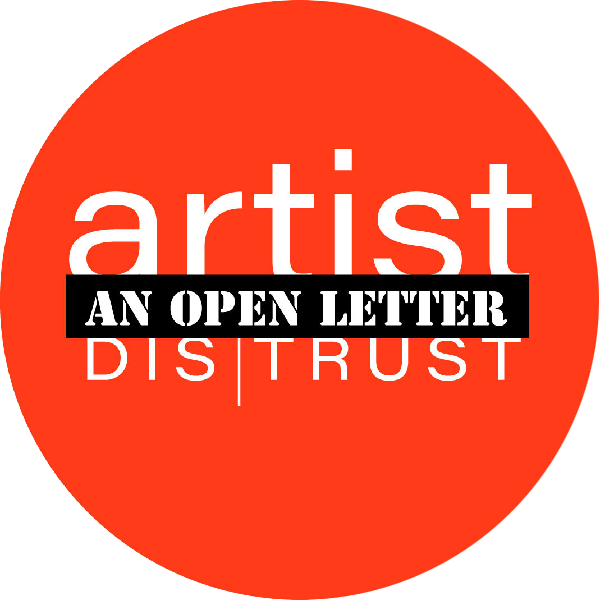
Artist Distrust Open Letter, a group of artists, including three of the five AIA panelists, published an open letter capturing their experiences with the funder as being “inequitable, opaque, and unresponsive to community needs” with “long-held practices that have unjustly impacted Black, Indigenous, and otherwise racialized peoples.” Image courtesy of Artist Distrust.
Over the course of decades of working with nonprofits, particularly arts- and community-based organizations, we’ve seen an unfortunate pattern emerge. With the regularity of waves, many nonprofits move in and out of cycles of fiscal instability. The factors are familiar and well-known: drops in earned revenue for various reasons, often out of leaders’ control; shifts in the priorities of donors; turmoil in staffing and leadership; and restrictions placed on funds.