Download:
 Building a Resilient Sector (9.2Mb)
One does not discover new lands without consenting to lose sight of the shore.
— André Gide
Contact GIAGIA Reader PublicationBecome A GIA Member
450 Lexington Ave, Unit 4501 | New York, NY | gia@giarts.org

The GIA Library is an information hub that includes articles, research reports, and other materials covering a wide variety of topics relevant to the arts and arts funding. These resources are made available free to members and non-members of GIA. Users can search by keyword or browse by category for materials to use in research and self-directed learning. Current arts philanthropy news items are available separately in our news feed - News from the Field.
Download:
Building a Resilient Sector (9.2Mb)
About four years ago I attended an extraordinary meeting in Philadelphia. Susan Nelson, principal of Technical Development Corporation (TDC), was presenting the draft of Getting Beyond Breakeven to the Greater Philadelphia Cultural Alliance and many other stakeholders associated with the work.
Spurred on by technological advances, the number of aspiring professional artists in the United States has reached unprecedented levels. The arts’ current system of philanthropic support is woefully underequipped to evaluate this explosion of content — but we believe that the solution to the crisis is sitting right in front of us. Philanthropic institutions, in their efforts to provide stewardship to a thriving arts community, have largely overlooked perhaps the single most valuable resource at their disposal: audience members.
October 2011, 32 pages. Monitor Institute, 101 Market Street, Suite 1000, San Francisco, CA, 94101, (415) 932-5300 www.monitorinstitute.com.
The world is constantly evolving in how it uses technology. In consequence, the arts field has struggled, adapted, and sometimes excelled in its own utilization of technology. To capture and better understand these trends, The Andrew W. Mellon Foundation commissioned a study of technology usage in the arts field to learn about organizations’ practices and needs. This report combines a comprehensive survey of the arts field with more recent in-depth qualitative research.
At a recent public debate about organic food, the proponents of organic farming extolled its virtues by listing its various benefits. It is kinder to the environment, they said, and to animals, and it keeps toxic chemicals out of our bodies. “But does it taste better?” an audience member asked. To my surprise, the experts hesitated. “We can’t reliably measure that effect,” one of them explained. “So it’s not a claim we make.” The exchange reminded me about everything that’s wrong with arts advocacy these days.
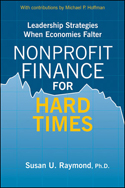
2010, 195 pages, ISBN 978-0-470-49010-5. John Wiley & Sons, Inc., 111 River Street, Hoboken, NJ, 07030, 201-748-6011, www.wiley.com