
Philanthropic practice
“What are we doing to cultivate new generations of arts activistsartists, arts managers and arts philanthropers?” This questionoften asked and long massagedhas an equal number of answers to the individuals attempting to answer it. Under the broader umbrella of inspiring young people to make a differencethrough the arts or otherwiseDo Something is an organization that is effectively answering that question with meaningful action.
Read More...Founded in 2003 by GRAMMY Award-winning songwriter and producer Dallas Austin, the Dallas Austin Foundation, Inc. (DAF) aims to transform the lives of young people by enriching their educational experiences through the use of music and film.
Read More...Danny Newman, who died last year (2007) at the age of eighty-eight, was a major post- World War II patron of the arts, but his contributions were not personal checks. Rather, they lay in helping arts companiestheaters, orchestras, dance groups, operasbuild strong, committed audiences, providing the sound financial basis they needed to survive and flourish. His major tool was the promotion of subscriptions, a wide-ranging effort embodied in his book Subscribe Now! Building Arts Audiences through Dynamic Subscription Promotion.
Read More...2007. 162 pages. AltaMira Press, a division of Rowman & Littlefield Publishers, Inc., Lanham, MD 20706, www.altamirapress.com
Read More...Jaime Cortez was an arts and culture fellow at the San Francisco Foundation for two years. At the end of his fellowship, he and the other outgoing fellows were asked to read a prepared farewell statement to the board and staff of the foundation. Following is his closing presentation, given on July 9, 2008.
Read More...2006, 196 pages. Published by Princeton University Press, 41 William Street, Princeton, NJ, 08540, (609) 258-4900, press.princeton.edu
Read More...Read More...Last fall after the Taos Journey conference, Anne Focke and I got together to (as we say in California) process the event. She gave me a journal for my writing and a copy of a beautiful little chapbook, A Pragmatic Response to Real Circumstances, originally published by the back room, Portland, Oregon.
2008, 26 pages. Centre for Charity Effectiveness, Cass Business School, 106 Bunhill Row, London, EC1Y 8TZ, UK, www.cass.city.ac.uk/cce/
http://www.cass.city.ac.uk/cce/pdf_files/famfoundationphil.pdf
Read More...Rutgers University Press, New Brunswick, New Jersey, and London, 2008, 297 pages, Edited by Diane Grams and Betty Farrell.
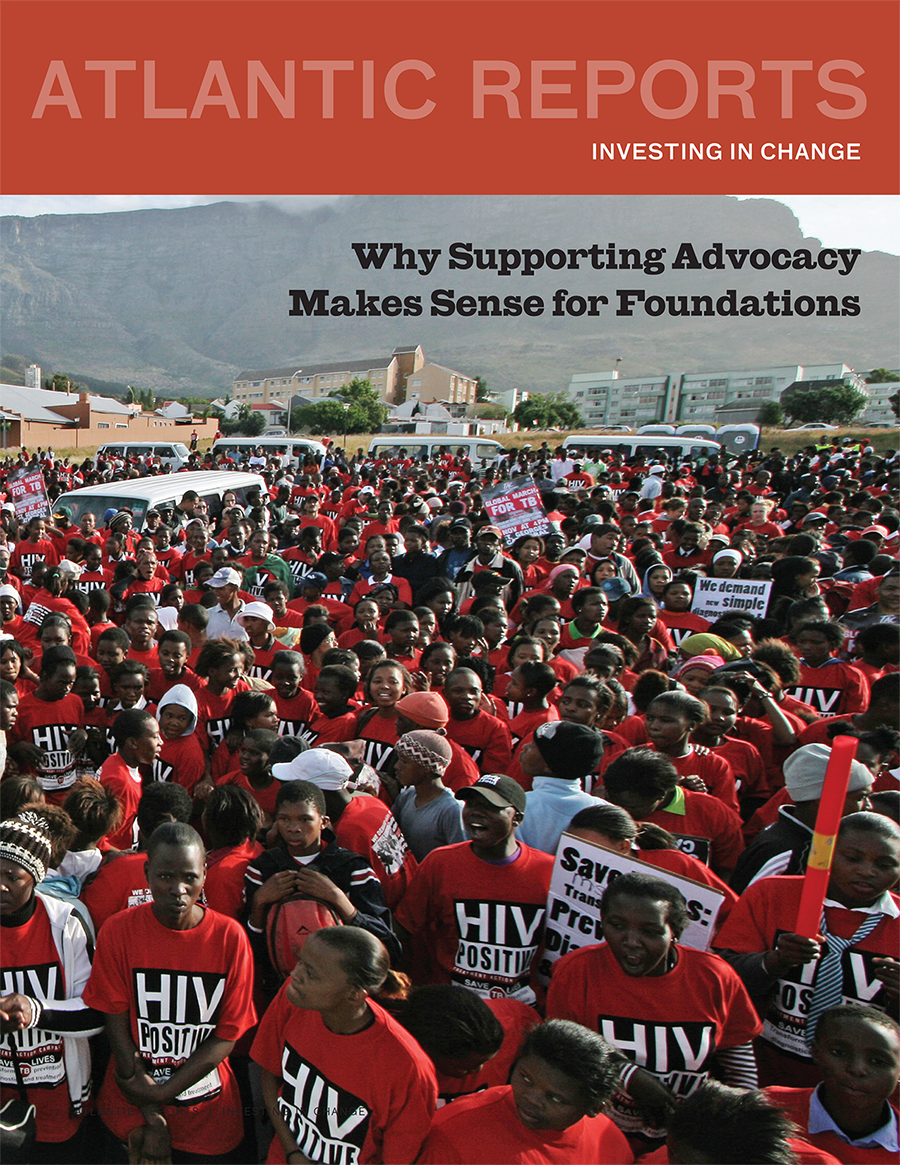
Read More...20 pages, 2008. Atlantic Philanthropies. http://www.atlanticphilanthropies.org
Download:
Read More...