Support for Individual Artists

GIA members have been working together to promote and improve funding for individual artists for over 20 years. The Support for Individual Artists Committee has been one of the most active groups of funders within GIA. Over the years, the committee has been an incubator for such projects as a scan of scholarly research on artist support, a visual timeline outlining the history of artist support funding, major publications, and programs, and the development of a national taxonomy for reporting data on support for individual artists. The committee continues to advise, inspire, and inform GIA’s thought leadership and programming in support for individual artists.

Click here to listen to the latest podcast, and see below for resources.

by Abigail

The last two meetings of the GIA Individual Artists Group Steering Committee focused primarily on the preconference, sessions, and roundtable gathering in preparation for the Miami conference, in addition to the research study GIA is conducting on the support of individual artists nationwide.

With an overarching goal of creating a network of mutual support, the committee worked to strengthen communication with like-minded funders and increase efforts to connect the sector and reach new funders.

Read More...
by giarts-ts-admin

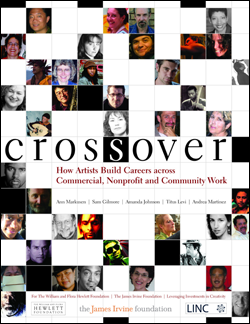
Ann R. Markusen et al., 2006. Minneapolis: Arts Economy Initiative, Project on Regional and Industrial Economics, Humphrey Institute of Public Affairs, University of Minnesota.

Read More...
by giarts-ts-admin
What is a woman’s relationship between the experience of spending time in a natural setting away from everyday chores, and the release of self-expression through writing?
Start with this:
Walking on a salty sandy beach, then sitting down to write.
Eating thoughtfully created organic meals prepared for you in a warm kitchen. Sharing your new writing with the other residents in a comfortable living room after dinner.
Read More...
by giarts-ts-admin
“Theatres are the best way to keep people from the arts.”
— Simon Dove, Utrecht Festival, Dance/USA Forum, January 2011

Why will some people engage with art in one setting, but not another? For example, why will someone watch great drama on television at home, but never darken the door of a theater? Why will someone listen to classical music in a place of worship, but not a concert hall?

Read More...
by Abigail

The Steering Committee co-chairs opened the May meeting by welcoming new members Denise Brown, Leeway Foundation; Ben Cameron, Doris Duke Charitable Foundation; Julie Dalgleish, CERF+; Ruby Harper, Greater Columbus Arts Council; Jayson Smart, Rasmuson Foundation; and Sacha Yanow, Art Matters. The Committee then discussed the guidelines, put forward by the subcommittee formed during the February meeting, for ensuring a dynamic, involved membership, including the staggered, two-year terms of the co-chairs that ensure renewed and shared leadership of the committee.

Read More...
by Abigail

The GIA Support for Individual Artists Group Steering Committee met in February to discuss four topics: Committee membership; the 2012 GIA conference and preconference in Miami; future activities surrounding the case statement developed by the committee in 2011 to advocate for the support of individual artists; and participation in other associations’ conferences.

Read More...
by giarts-ts-admin

Artspire. 2011, 219 pages, Allworth Press and The New York Foundation for the Arts, New York

Read More...
by giarts-ts-admin

Caron Atlas, Project Director and Editor. 2011, 200 pages, Arts and Democracy Project, Brooklyn, New York

Bridge Conversations is an inspiring collection of interviews, dialogues, and essays with artists, arts administrators, activists, and politicians using the arts to build, reflect, and improve community. It is thoughtfully constructed and inclusive in those selected to participate, their topics, and their approaches.

Read More...
by giarts-ts-admin

Strategies for funding individual artists can often resemble the principles and policies of trickle-down economics. Grants to arts organizations secure the physical plant and operations of those organizations, allowing them to offer artists the opportunity to present their work, to be seen and heard — at which point the obligation to the artists is fulfilled. This model does not acknowledge that artists and the things they make defy supply-and-demand economics.

Read More...