
The GIA 2010 Webinar Series featured 7 sessions.
Search
The GIA Library is an information hub that includes articles, research reports, and other materials covering a wide variety of topics relevant to the arts and arts funding. These resources are made available free to members and non-members of GIA. Users can search by keyword or browse by category for materials to use in research and self-directed learning. Current arts philanthropy news items are available separately in our news feed - News from the Field.
(3-31-2010) Last week I attended Katrina@5, a conference for funders sponsored by the Association of Small Foundations. Grantmakers in the Arts was one of the several association partners that helped plan and promote the conference. The goal was to share the successes and mistakes of the philanthropic response to the catastrophe that was hurricanes Katrina and Rita and the breaking of the levies.
(3-16-2010) I’m going to the Katrina@5 conference in New Orleans hosted by the Association of Small Foundations, March 22-24. Many funding affinity groups have partnered on this conference whose main purpose is to look at the lessons learned during Katrina and how the philanthropic community can respond efficiently and effectively in the future. Since there is no scarcity of emergencies and disasters in the world, this is a pretty good idea.
While researching for a town hall meeting held last fall at New Dramatists to discuss the low numbers of female written plays reaching production, I noticed that, by every estimate, work by women made up only approximately 17% of the total number of new plays produced in this country; yet, in an apparent paradox, 31% of the plays on the Theater Communication Group’s list of the “Top Ten Most Produced Plays in American Theatre” were written by women.
The Durfee Foundation’s ARC program — Artists’ Resource for Completion — is, you might say, a program designed to let a thousand flowers bloom. It was founded in 2000 to serve Los Angeles artists, in any discipline and at any career level. The grants are made quarterly, for small sums of up to $3,500 per artist. About sixty to seventy artists are funded each year (fifteen to eighteen each quarter).
The following is an excerpt from “Cultural Awareness in a Time of Crisis,” an introductory essay published for the conference “Bridging the Divide Between the United States and the Muslim World Through Arts and Ideas: Possibilities and Limitations,” presented by New York University Center for Dialogues, June 6–7, 2009.
My goal for putting together a session at the 2009 GIA Conference entitled: “Changing the Game: New Models, New Leaders, New Ideas for the Arts,” was to cast new light on old problems by enriching our collective conversation with new voices. I described it in the conference guide this way:
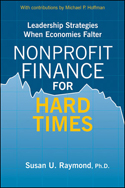
2010, 195 pages, ISBN 978-0-470-49010-5. John Wiley & Sons, Inc., 111 River Street, Hoboken, NJ, 07030, 201-748-6011, www.wiley.com
The recession has impacted all professions, and artists are no exception. As of 2001, there were more than 2.5 million working artists in the United States, representing a critical part of the entrepreneurial, independent workforce. In the summer of 2009, Leveraging Investments in Creativity (LINC), in partnership with Helicon Collaborative and Princeton Survey Research International, developed the Artists and the Economic Recession Survey to provide high-quality and timely information to funders and artist service organizations.
At the 2009 GIA conference in Brooklyn, we asked participants to tell us how Grantmakers in the Arts can best contribute to building a successful nonprofit arts sector in this country over the next ten years. Participants provided 439 ideas, from which six strategies emerged. These strategies will drive the future work of GIA, which as a national association is uniquely positioned to serve the “greater good” of a vital sector of American society.