
Despite New York City’s status as the dance capital of the United States, rising real estate prices are challenging the city’s ability to serve as a creative incubator, with space — an essential resource for making dance — in waning supply. Choreographers and dancers need to work in a large open area with a sprung floor, but as real estate values climb, long-standing dance studios are being bought by developers and converted into residential or commercial spaces.
Search
The GIA Library is an information hub that includes articles, research reports, and other materials covering a wide variety of topics relevant to the arts and arts funding. These resources are made available free to members and non-members of GIA. Users can search by keyword or browse by category for materials to use in research and self-directed learning. Current arts philanthropy news items are available separately in our news feed - News from the Field.
Download:
 Building a Resilient Sector (9.2Mb)
One does not discover new lands without consenting to lose sight of the shore.
— André Gide
About four years ago I attended an extraordinary meeting in Philadelphia. Susan Nelson, principal of Technical Development Corporation (TDC), was presenting the draft of Getting Beyond Breakeven to the Greater Philadelphia Cultural Alliance and many other stakeholders associated with the work.
Rocco Landesman’s Can of Worms
At a recent public debate about organic food, the proponents of organic farming extolled its virtues by listing its various benefits. It is kinder to the environment, they said, and to animals, and it keeps toxic chemicals out of our bodies. “But does it taste better?” an audience member asked. To my surprise, the experts hesitated. “We can’t reliably measure that effect,” one of them explained. “So it’s not a claim we make.” The exchange reminded me about everything that’s wrong with arts advocacy these days.
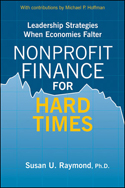
2010, 195 pages, ISBN 978-0-470-49010-5. John Wiley & Sons, Inc., 111 River Street, Hoboken, NJ, 07030, 201-748-6011, www.wiley.com
As funders we have three main challenges: first, getting a handle on the extent and impact of the recession; second, exerting leadership — being bold, positive, and opportunistic without being insensitive; and third — and most important — asking ourselves the same tough questions that we are asking grantees: how do we slip the vice-like grip of old mindsets and behaviors and adapt so we increase our relevance, resilience, and meaningful contributions to our community?
— Foundation President
— Foundation President
In late January GIA polled its 309 member organizations about their organization's responses to the economic downturn. 117 (38%) members responded, which provides a healthy sample of the membership.
Members reported their expected 2009 arts grantmaking would likely compare to 2008 as follows:
- 41% expected that 2009 would be the same as 2008.
- 13% expected that it would be reduced to 90% of 2008.
- 12% expected that it would be reduced to 80% of 2008.
- 11% expected that it would be reduced to 70% of 2008.
How can funders apply what they know about changes in the external environment—in demographics, use of free time, use of disposable income—to best serve and stabilize theaters and other mid-sized arts groups?
Sue Coliton, Paul G. Allen Family Foundation (moderator); Nancy Fushan, Bush Foundation; Lawrence Thoo, San Jose Office of Cultural Affairs; Ben Cameron, Doris Duke Charitable Foundation (interlocutors).
Re-imagining Orchestras: A forthright report on the mixed results of one foundation's efforts
Stan Hutton