
What do you believe the arts sector ought to look like twenty years from now? This is a question that every arts funder should be able to answer with a healthy amount of specificity. Whether arts funders choose to acknowledge it or not, much of what we do shapes the future of the field. This point is not intended to give arts funders more power than we actually have but to acknowledge reality. Funders’ actions — including when we choose not to act — prioritize, privilege, and capitalize particular models over others.
Search
The GIA Library is an information hub that includes articles, research reports, and other materials covering a wide variety of topics relevant to the arts and arts funding. These resources are made available free to members and non-members of GIA. Users can search by keyword or browse by category for materials to use in research and self-directed learning. Current arts philanthropy news items are available separately in our news feed - News from the Field.
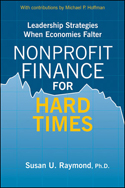
2010, 195 pages, ISBN 978-0-470-49010-5. John Wiley & Sons, Inc., 111 River Street, Hoboken, NJ, 07030, 201-748-6011, www.wiley.com
When I was in college, I had a great work-study job at an organization that placed students in internships with local nonprofits. It was a small outfit and a jack-of-all-trades sort of job. I answered phones, mocked up application forms, stuffed envelopes, filed, ran errands, organized open houses, and learned how to write a business letter. It wasn’t the sort of job you’d want to stay in for too long, but it was a fabulous introduction to the nonprofit sector. It gave me practical office skills to boot.
In late January GIA polled its 309 member organizations about their organization's responses to the economic downturn. 117 (38%) members responded, which provides a healthy sample of the membership.
Members reported their expected 2009 arts grantmaking would likely compare to 2008 as follows:
- 41% expected that 2009 would be the same as 2008.
- 13% expected that it would be reduced to 90% of 2008.
- 12% expected that it would be reduced to 80% of 2008.
- 11% expected that it would be reduced to 70% of 2008.
Historical data do not mean anything in this situation. There is no blueprint and there is no network. We are doing the best we can with a combination of hard facts and intuition. Every line item is up for grabs; every $1,000 is material. How we feel about it all depends on which newspaper we read that morning.
Managing Director, large performing arts group
Introduction
“What are we doing to cultivate new generations of arts activistsartists, arts managers and arts philanthropers?” This questionoften asked and long massagedhas an equal number of answers to the individuals attempting to answer it. Under the broader umbrella of inspiring young people to make a differencethrough the arts or otherwiseDo Something is an organization that is effectively answering that question with meaningful action.
Is a trend developing that favors drawing foundation leaders from the for-profit sector rather than from philanthropy or the nonprofit sector? If so, does it change senior grantmaking staff's challenges and opportunities? Would a more corporate view of private philanthropy affect how foundations view the arts?
Our Taos Journey essays depart by looking back at philanthropy's recent past. As the field has become more formalized as a profession, it also has attracted exposés and critiques. Many have called for greater accountability, transparency, and proof of effectiveness. While the critique is worthy and perhaps overdue, historian, philanthropist, and former GIA board member James Allen Smith calls for a deeper, shared understanding of professionalism.
Nonprofit organizations face a growing challenge of identifying sufficient numbers of future leaders and passing on leadership responsibilities. For a story about the needs of emerging leaders, we approached Alvin Warren, a young tribal leader and lieutenant governor of Santa Clara Pueblo, who played a seminal role in his Pueblo's success at recovering part of its ancestral land. Many funders who are concerned about the challenge of developing future leaders are addressing it by supporting workshops, training, and coaching.