Download: Arts Funding Snapshot: GIA’s Annual Research on Support for Arts and Culture (1.1Mb)
Contact GIAGIA Reader PublicationBecome A GIA Member
450 Lexington Ave, Unit 4501 | New York, NY | gia@giarts.org

The GIA Library is an information hub that includes articles, research reports, and other materials covering a wide variety of topics relevant to the arts and arts funding. These resources are made available free to members and non-members of GIA. Users can search by keyword or browse by category for materials to use in research and self-directed learning. Current arts philanthropy news items are available separately in our news feed - News from the Field.
Download:
Arts Funding at Twenty-Five (318Kb)
The easy convenience of typing a few key words into a search box and promptly being immersed in data can make one forget that this capability has existed for a remarkably short period of time. Just twenty-five years ago — a point in time well within the recollection of most members of the arts and culture sector — Stanley N. Katz, then president of the American Council of Learned Societies, observed, “the serious study of arts philanthropy is less than a generation old, and we are just beginning the sorts of data collection and analysis…we need to make sound judgments about the field.”1
The mission of the James F. and Marion L. Miller Foundation, established in 2002, is to enhance the quality of life of Oregonians through support of the arts and education. In the midst of the 2009 recession, the foundation began a six-year grantmaking initiative that provided general operating support to Portland’s five large arts organizations. The foundation made important shifts in its grantmaking strategy to help shore up the financial strength and stability of the Portland Opera, Oregon Ballet Theatre, Portland Center Stage, Portland Art Museum, and the Oregon Symphony.
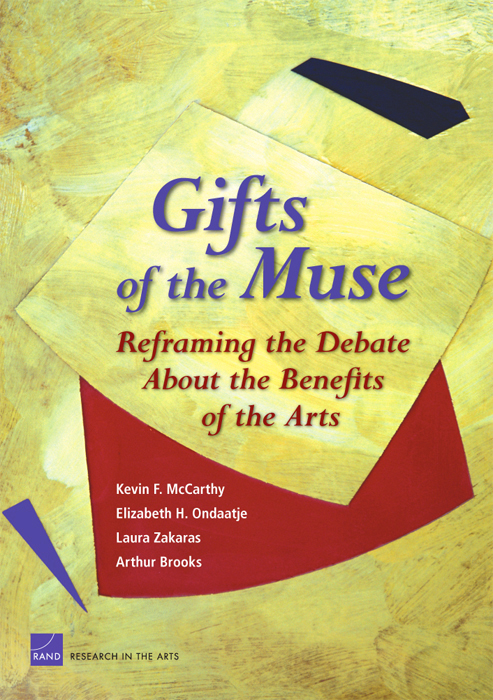
Kevin F. McCarthy et al., 2004. Santa Monica, CA: RAND Research in the Arts.
This article is part of the Revisiting Research series.
Introduction
Sue Coliton, Paul G. Allen Family Foundation (moderator); Nancy Fushan, Bush Foundation; Lawrence Thoo, San Jose Office of Cultural Affairs; Ben Cameron, Doris Duke Charitable Foundation (interlocutors).