Download:
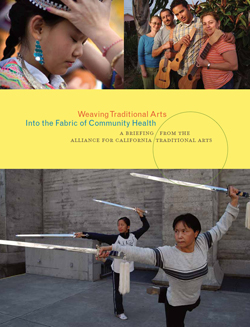
 Weaving Traditional Arts into the Fabric of Community Health (1 Mb)
Contact GIAGIA Reader PublicationBecome A GIA Member
450 Lexington Ave, Unit 4501 | New York, NY | gia@giarts.org

The GIA Library is an information hub that includes articles, research reports, and other materials covering a wide variety of topics relevant to the arts and arts funding. These resources are made available free to members and non-members of GIA. Users can search by keyword or browse by category for materials to use in research and self-directed learning. Current arts philanthropy news items are available separately in our news feed - News from the Field.
Download:
Weaving Traditional Arts into the Fabric of Community Health (1 Mb)
In the past two years, several prominent foundations at national, regional, and local levels have appointed new presidents. Such leadership transitions are likely to increase in the years ahead in keeping with the larger generational shift in the nonprofit sector. Very few of the new foundation leaders are likely to come from the arts sector, and many will have had little direct experience with our field.
Between 2006 and 2008, the Social Impact of the Arts Project, a research group at the University of Pennsylvania (SIAP), collaborated with The Reinvestment Fund (TRF), a community development financial institution, on an investigation of the creative sector's potential contribution to neighborhood economic and community development.
"I believe that if we can keep our values close, our imaginations open, and our stories fierce, we can and will win." - Thenmozhi Soundararajan
Introduction
America is on the threshold of a significant transformation in cultural life. There have been many cultural shifts in recorded history: Gutenberg's invention of the printing press and the rise of the reading public; the growth of a mercantile class and the birth of private art markets independent of the church and the king; the invention of gas streetlights and the beginning of urban nighttime entertainment. The most recent cultural transformation, still with us today, was set in motion on the threshold of the twentieth century.
As Tia Oros Peters so eloquently states in her essay that follows, there is no particular word for art in the thousands of Indigenous languages of the world. While there are hundreds of Native American languages, the same holds true; Native Americans do not and cannot separate the importance of art and culture from everyday life. It is one goal of GIA's Indigenous People's Network to bring this important way of life to the fore of grantmakers' thinking.
2004, 37 pages. Published by National Craft Emergency Relief Fund, 73 Main Street, #37, Montpelier, VT, 05602, 802-229-2306, www.craftemergency.org
This report offers the results of a nationwide survey undertaken by CERF to establish a snapshot of the state of crafts artists, and guide the future programs of the organization.