
From Mary Plummer at KPCC, 89.3FM:
Grantmakers in the Arts
by Steve
From Peter Dobrin, writing for the Philadelphia Inquirer:
Is the act of funding great art its own reward? Or does the funder have the right or even the responsibility to make sure that what gets produced accomplishes a set of objectives for both the giver and the recipient? It is a given now that in order to get a foundation grant, it’s often not enough to simply apply for funding of what you do day in and day out. What do funders want? Innovation! New ways of “engaging” younger audiences! High-impact special projects that others will want to emulate!
by Janet
By Janet Brown from her blog Better Together
From large major institutions to small nonprofits, one of the critical responsibilities of volunteer board members and funders is to assure best practices in fiduciary and organizational management. When a management issue arises that threatens the stability of a nonprofit arts organization, “where was the oversight?” is often the question on everyone’s lips. There are some common misperceptions and unfortunate “group think” that prevent or discourage adequate oversight by board members. Here are a few:
by Steve
From Naseem Miller, writing for the Orlando Sentinel:
The Dr. Phillips Center Florida Hospital School of Arts and Wellness, unveiled on Thursday morning, aims to integrate various forms of art into wellness, whether it’s in the community or in health-care settings to help families, caregivers and people with conditions such as autism, dementia, trauma or anxiety… The center’s effort is part of a national movement — from the military’s National Intrepid Center of Excellence that integrates arts into care of returning soldiers to the Arts & Medicine Institute in Cleveland Clinic — but data and standards are still emerging.
by Steve in Arts Education
New Jersey continues to lead the nation through the release of detailed arts education information to the public and the research findings look promising — a 4% increase in high school arts participation from the previous year with significant increases in dance and theater participation. These findings are based on the arts educator assignment data for all schools and the high school arts participation data from the New Jersey School Performance Reports just released by the New Jersey State Department of Education.
by Steve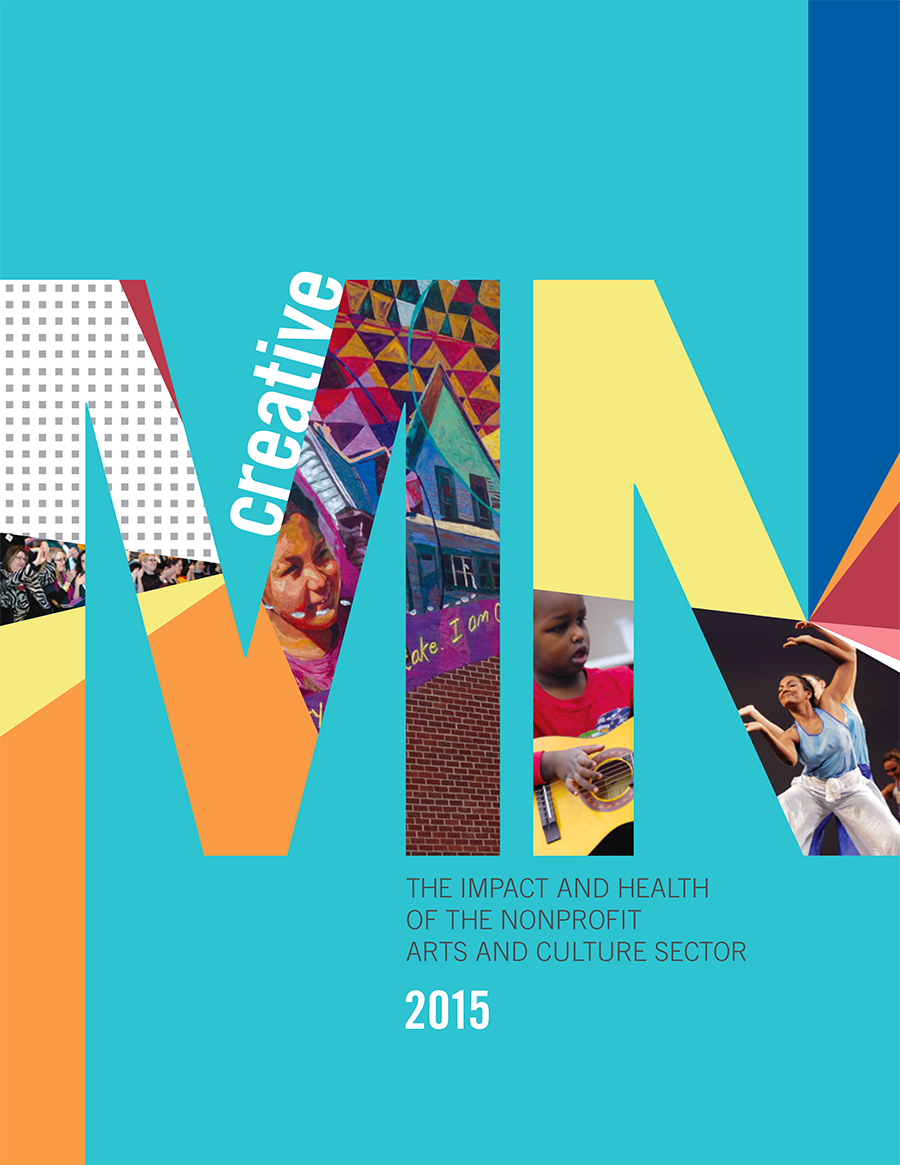
Creative Minnesota: The Impact and Health of the Nonprofit Arts and Culture Sector is a report and accompanying website that breaks out data both statewide and regionally and serves as a snapshot of spending by nonprofit arts and culture organizations and their audiences, as well as other indicators of the sector’s health and impact on the economy in 2013. The broader initiative called “Creative Minnesota” is a new effort to fill the gaps in available information about Minnesota’s cultural field and to improve our understanding of its importance to our quality of life and economy. It kicks off a new centralized, concentrated and long term endeavor to collect and report data on the creative sector every two years for analysis, education and advocacy.
by Steve
From Theresa Agovino, writing for Crain's New York:
In contrast to the troubles at bigger institutions, many small opera companies are flourishing, and their numbers are expanding. Some 33 such companies exist in New York City today, more than double the number a decade ago, according to Opera America, a membership organization that promotes the art form. They are surviving and thriving because their budgets and number of staged productions are only a fraction of that of the big boys, and they specialize in niches. LoftOpera presents scaled-down versions of classic operas staged in nontraditional settings, such as former factories. Gotham Chamber Opera sets itself apart by featuring seldom-performed compositions created for smaller venues.
by Steve
Kristen Madsen, a current member of the Grantmakers in the Arts Board of Directors, and Senior Vice President of the GRAMMY Foundation and MusiCares Foundation, has been appointed the new Director of Arts at the Sonoma County Economic Development Board. She will be responsible for the Creative Sonoma program, which was adopted by the Sonoma County Board of Supervisors in June 2014 and seeks to boost the nonprofit arts community and the creative for-profit arts sector. The Arts Action Plan, which established the Creative Sonoma program, explains the development path for cultural and economic development, including funding and structural plans. Kristen will join the Sonoma County Economic Development Board initially on a part-time basis March 16, 2015 and will assume full-time employment starting April 1, 2015.