Grantmakers in the Arts

by Steve

Vickie Benson, posting to The McKnight Foundation blog:

Simply stated, creative placemaking builds strong, cross-sector partnerships grounded in arts and culture, by people and for people, to celebrate the lifeblood of a place. And while the cross-sector aspect is undeniably important, a crucial factor for success, in my opinion, is that arts organizations and artists are treated as leading or equal partners in the broad mix. It was important for the arts field to have researchers as experienced, thoughtful, and knowledgeable as Markusen and Gadwa — each with their own long histories working with artists — to tackle the phenomena of creative placemaking.
by Steve

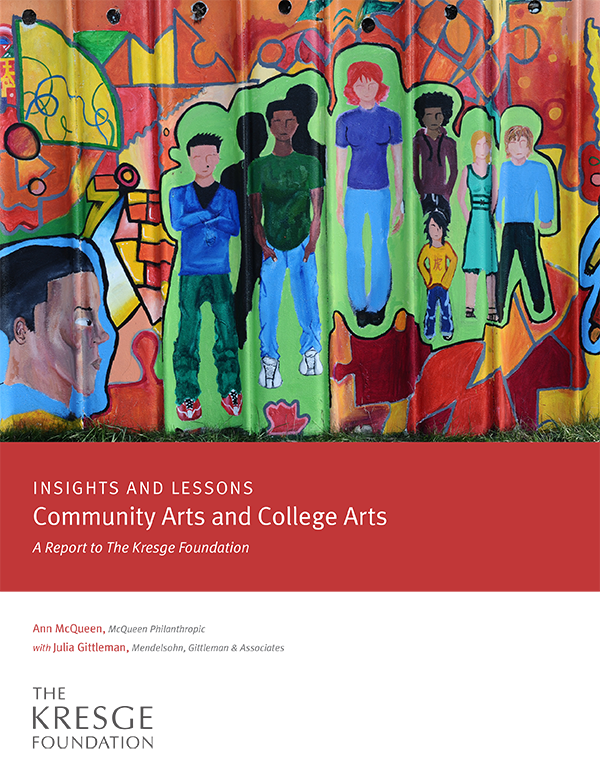
Insights and Lessons: Community Arts and College Arts is a new report commissioned by The Kresge Foundation at the completion of a pair of multiyear initiatives that were intended as a way to challenge communities to use art and culture as a tool to address broader community issues in underinvested urban neighborhoods.

The foundation saw the two pilots — Community Arts and College Arts — as learning initiatives that would enable staff to experiment with a different kind of grantmaking. They would also test the assumption that the arts can address society’s pressing issues, transform communities and lift spirits during an economic downturn. While many local funders have deep experience in community arts, it was new territory for Kresge’s Arts and Culture Program.

by Steve

On April 28th and 29th, Aroha Philanthropies will convene an intimate gathering of philanthropists, grantmakers and thought leaders to explore the emerging field of artful aging — and the transformative potential that learning, making and sharing art can have for people 55 and over. The convening will be held at the offices of The William and Flora Hewlett Foundation in Menlo Park, California.

Learn more and request an invitation to attend.

by Steve

Julia M. Stasch, who has served as interim president for the past eight months, has been chosen as the next President of the John D. and Catherine T. MacArthur Foundation. Before becoming interim president, she had served as Vice President for MacArthur’s U.S. Programs for 13 years and led work in juvenile justice, affordable rental housing, community development finance, and policy research, as well as community and economic development in Chicago.

by Steve

Corporate Social Responsibility & the Arts, a new report from AFTA’s Animating Democracy program, explores the current landscape of corporate support for arts and culture — one in which more corporations are focusing strategically on issues that align with their business interests and have a positive social impact on their employees, their consumers, and/or the communities in which they do business.

by Steve in Capitalization

From Rebecca Thomas, writing for Associated Grant Makers:

by Steve

From Ruth McCambridge, writing for Nonprofit Quarterly:

The Council on Foundations just released its latest salary survey, so we thought we would share some of its most pertinent findings as they relate to diversity and leadership data from other surveys. Some of it conforms to what we see happening in the rest of the sector — older, relatively white CEO leadership with relatively long tenures.
  • Relatively long CEO tenures: More than 40 percent of grantmaker CEOs have been CEO for ten or more years. This is almost exactly the same percentage as was found in the recent survey of nonprofits performed by BoardSource, where it was reported that 41 percent of the CEOs who responded had been in their positions for 10 years or longer.
by Steve

Vickie Benson, arts program director for The McKnight Foundation (and former GIA Chair), talks to Barry Hessenius:

Foundations are in business to be in support of their missions. McKnight’s arts program follows a legacy set early on by the McKnight Foundation Board of Directors—the arts program supports working artists. We rely on arts organizations to provide the support structures that working artists need to be successful — institutions of all types, sizes, and ages that support working artists.