
The League of American Orchestras invited Alan Brown to deliver this keynote at our 2014 conference in Seattle. We were delighted that he turned his attention to the lessons learned from organizations that stay creatively healthy, arguably our most essential role.
Search
The GIA Library is an information hub that includes articles, research reports, and other materials covering a wide variety of topics relevant to the arts and arts funding. These resources are made available free to members and non-members of GIA. Users can search by keyword or browse by category for materials to use in research and self-directed learning. Current arts philanthropy news items are available separately in our news feed - News from the Field.
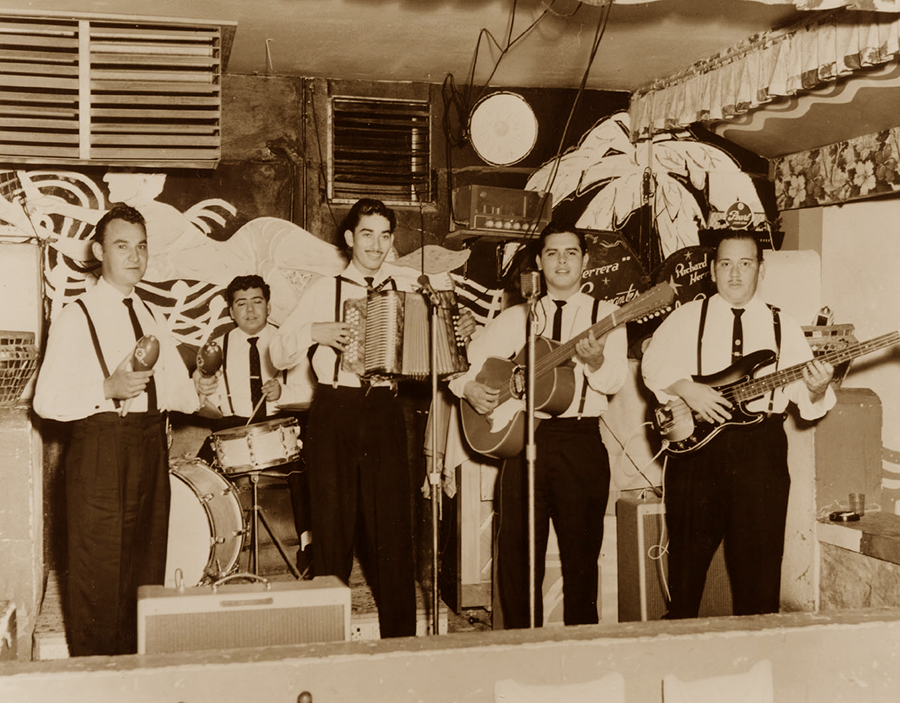
Flaco Jiménez with Los Caminantes (the band he made his first recordings with for Rio Records). San Antonio, mid to late 1950s. Photo courtesy the Arhoolie Foundation, all rights reserved.
The struggle to ensure that art work is recognized as real work and compensated accordingly is an essential one, and it continues through the efforts of art collectives and organizations, the actions of artists, and countless individual decisions to accept or reject engrossing but unpaid jobs.
— Elyse Mallouk, “On Laboring for Love”
— Elyse Mallouk, “On Laboring for Love”
The Cultural Data Project (CDP) was launched in fall 2004 as a statewide, web-based data collection system for arts and cultural organizations by a group of Pennsylvania grantmakers and arts advocates, including the Greater Philadelphia Cultural Alliance, the Greater Pittsburgh Arts Council, the Heinz Endowments, the Pennsylvania Council on the Arts, The Pew Charitable Trusts (Pew), The Pittsburgh Foundation, and the William Penn Foundation.
By Janet Brown from her blog Better Together:
A very smart woman once told me there are two motivating factors in the world: love and fear. I’ve spent the past several years analyzing actions, events, and people under this framework and trying to assess my own motivations in different situations. It holds up.
An American lady traveling to Paris in 1913 — the kind of American lady who will still be traveling to Paris in 2013 — asked Ezra Pound what he thought art was for. Pound replied: “Ask me what a rose bush is for.”
Europe was on the edge of war. Do rose bushes matter in a war? What can art do for us now, in the likelihood of another war?
In other cultures Meredith Monk would be called shaman, seer, healer; here we struggle to define her interdisciplinary prowess. Singer/composer, dancer/choreographer, actor/performer, director/playwright, visual artist/filmmaker — even together, these categories cannot capture her resplendent achievements.
In January I had the privilege to attend the Future Aesthetics 2.0 retreat, co-organized by Marc Bamuthi Joseph, director of Performing Arts of the Yerba Buena Center for the Arts, and James Kass, executive director of Youth Speaks. Participating were twenty-three performance-based artists, Helicon Collaborative partners Holly Sidford and Alexis Frasz, and Cheryl Ikemiya from the Doris Duke Charitable Foundation, which funded the project through its Fund for National Projects.
Writing is a solitary pursuit, and writers are often depicted as hermit-like figures. Rural writers, however, unlike their more urban counterparts, face an additional kind of isolation: they have few opportunities to rub shoulders with other writers and few, if any, chances to attend readings. For young writers, the isolation is particularly acute. Role models are absent, and even the idea of being a writer can be so foreign as to never enter their heads.
Even folks entirely unfamiliar with the concept of creative placemaking intuitively grasp the potential for artist spaces to catalyze revitalization, and mural projects to animate vacant walls. The usual mental backdrops, however, are down-and-out urban neighborhoods.