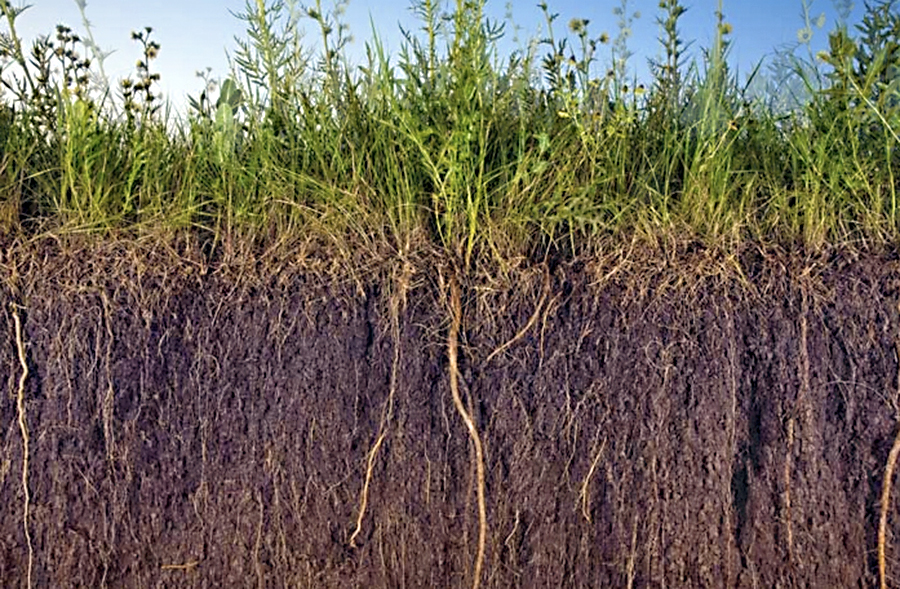
Just societies cannot grow in toxic soil. To build regenerative communities, we should look to how life flourishes in the natural world, of which we are an inherent part.
Contact GIAGIA Reader PublicationBecome A GIA Member
450 Lexington Ave, Unit 4501 | New York, NY | gia@giarts.org

The GIA Library is an information hub that includes articles, research reports, and other materials covering a wide variety of topics relevant to the arts and arts funding. These resources are made available free to members and non-members of GIA. Users can search by keyword or browse by category for materials to use in research and self-directed learning. Current arts philanthropy news items are available separately in our news feed - News from the Field.
Just societies cannot grow in toxic soil. To build regenerative communities, we should look to how life flourishes in the natural world, of which we are an inherent part.
A society’s values are the basis upon which all else is built. These values and the ways they are expressed are a society’s culture. The way a society governs itself cannot be fully democratic without there being clear avenues for the expression of community values, and unless these expressions directly affect the directions society takes. These processes are culture at work.
— Jon Hawkes, The Fourth Pillar of Sustainability: Culture’s Essential Role in Public Planning
What can you do when times are uncertain, and yet a clear opportunity to advance a collective agenda presents itself? Take action.
In 2008 I wrote Le facteur C (later translated as No Culture, No Future) because I felt an urgent need to respond to a troubling trend: a growing chasm between the art experiences that were being offered by arts professionals and those being sought out by an ever-growing portion of the public. My book argued that for the arts to thrive and to be a force in our everyday lives, the professional arts sector needed to do more and differently to engage people in the arts in meaningful, life-enriching ways.
Ralph Smith, the 2007 Conference Chairman, issued a challenge in his welcome message – “that all who attend will leave with renewed energy, capacity and resolve to make a positive contribution toward meeting the challenges of our time.”
Arts and education grantmakers at an historic gathering in Santa Fe in October of 2007 agreed on the need to forge a new vision for public education in the United States and to collectively explore how the arts can help shape and realize that vision.
Convened by Grantmakers in the Arts and Grantmakers for Education, more than 100 foundation representatives met formally for the first time under the aegis of their two affinity organizations to debate and discuss the role of the arts in education.
On March 7, 1997, the Los Angeles County Arts Commission, in conjunction with Community Partners, ARTS Inc., and the California Assembly of Local Arts Agencies, convened a workshop titled "Arts Incubators: Building Healthy Arts Organizations and Healthy Economies." The seventy-plus participants included representatives of arts organizations, local arts agencies, municipalities, and foundations.
I still remember my first sight of New York. It was really another city when I was born—where I was born. We looked down over the Park Avenue streetcar tracks. It was Park Avenue, but I didn't know what Park Avenue meant downtown. The Park Avenue I grew up on, which is still standing, is dark and dirty. No one would dream of opening up a Tiffany's on that Park Avenue, and when you go downtown you discover that you are literally in the white world. It is rich—or at least it looks rich. It is clean—because they collect the garbage downtown. There are doormen.