
Search
The GIA Library is an information hub that includes articles, research reports, and other materials covering a wide variety of topics relevant to the arts and arts funding. These resources are made available free to members and non-members of GIA. Users can search by keyword or browse by category for materials to use in research and self-directed learning. Current arts philanthropy news items are available separately in our news feed - News from the Field.
The League of American Orchestras’ upcoming national conference in Detroit falls just days before the fiftieth anniversary of the 1967 Detroit uprising, the largest urban disruption in America since the Civil War. According to Detroit Symphony Orchestra (DSO) president Anne Parsons, the 1967 riot was the context for the orchestra’s fellowship program for African American musicians.
Grantmakers in the Arts began work on capitalization in 2010. Ever since then we’ve debated not using the word “capitalization,” but it has prevailed. In our work, the term is synonymous with financial health and the resources needed to meet an organization’s mission. In 2010, GIA published recommendations for grantmakers regarding actions they could take that would improve the undercapitalized nature of the nonprofit arts sector.
Enriching our culture and engaging diverse and underserved communities, small arts organizations pop up, flourish, and sometimes flounder, mostly under the philanthropic radar. They often foster artistic expressions not adequately served by larger organizations.
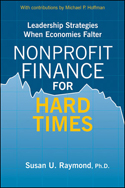
2010, 195 pages, ISBN 978-0-470-49010-5. John Wiley & Sons, Inc., 111 River Street, Hoboken, NJ, 07030, 201-748-6011, www.wiley.com
When I was in college, I had a great work-study job at an organization that placed students in internships with local nonprofits. It was a small outfit and a jack-of-all-trades sort of job. I answered phones, mocked up application forms, stuffed envelopes, filed, ran errands, organized open houses, and learned how to write a business letter. It wasn’t the sort of job you’d want to stay in for too long, but it was a fabulous introduction to the nonprofit sector. It gave me practical office skills to boot.
In late January GIA polled its 309 member organizations about their organization's responses to the economic downturn. 117 (38%) members responded, which provides a healthy sample of the membership.
Members reported their expected 2009 arts grantmaking would likely compare to 2008 as follows:
- 41% expected that 2009 would be the same as 2008.
- 13% expected that it would be reduced to 90% of 2008.
- 12% expected that it would be reduced to 80% of 2008.
- 11% expected that it would be reduced to 70% of 2008.
Repeatedly whipsawed by state budget emergencies, and by swings in the public's perception of what art is and how government ought to support it, state arts agencies are developing innovative ways to refocus their efforts from supporting arts providers through grant-giving to the larger public benefits of their work. Tiny agencies often overlooked among the welter of much larger line items in state budgets, they nonetheless have considerable impact in determining the destinies of arts providers, and the different constituencies they serve.
Historical data do not mean anything in this situation. There is no blueprint and there is no network. We are doing the best we can with a combination of hard facts and intuition. Every line item is up for grabs; every $1,000 is material. How we feel about it all depends on which newspaper we read that morning.
Managing Director, large performing arts group
Introduction