September 2013, 9 pages. Grantmakers In Health, 1100 Connecticut Avenue NW, Suite 1200, Washington, DC 20036, (202) 452-8331, gih.org.
Download:
 Innovative Crossroads: The Intersection of Creativity, Health, and Aging (221 Kb)
Contact GIAGIA Reader PublicationBecome A GIA Member
450 Lexington Ave, Unit 4501 | New York, NY | gia@giarts.org

The GIA Library is an information hub that includes articles, research reports, and other materials covering a wide variety of topics relevant to the arts and arts funding. These resources are made available free to members and non-members of GIA. Users can search by keyword or browse by category for materials to use in research and self-directed learning. Current arts philanthropy news items are available separately in our news feed - News from the Field.
September 2013, 9 pages. Grantmakers In Health, 1100 Connecticut Avenue NW, Suite 1200, Washington, DC 20036, (202) 452-8331, gih.org.
Download:
Innovative Crossroads: The Intersection of Creativity, Health, and Aging (221 Kb)
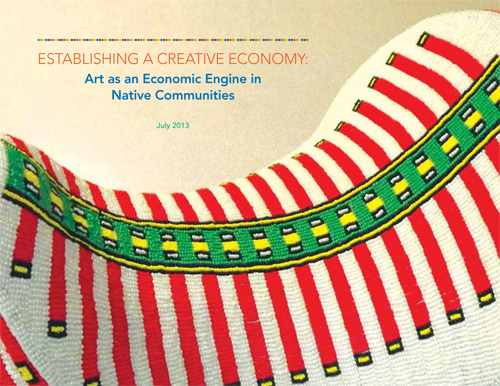
July 2013, 40 pages. First Peoples Fund, P.O. Box 2977, Rapid City, South Dakota, 57709, firstpeoplesfund.org.
Download:
Since the Ford Foundation’s institutional stabilization programs of the 1960s, arts funders have explored and implemented initiatives intended to promote the sustainability of arts organizations. Funding approaches, programs, and special terminology have been developed in support of the arts’ economic and social contributions to society. Artists and arts organizations are evaluated on the basis of their fiscal prudence and community contributions as well as artistic merit.
Kevin F. McCarthy et al., 2004. Santa Monica, CA: RAND Research in the Arts.
This article is part of the Revisiting Research series.
Enriching our culture and engaging diverse and underserved communities, small arts organizations pop up, flourish, and sometimes flounder, mostly under the philanthropic radar. They often foster artistic expressions not adequately served by larger organizations.
Every member of the arts community has been affected by the unprecedented challenges and opportunities proffered by technology. The last decade has observed our field coming to terms with this disruptive force in inspiring and innovative ways. Equally exhilarating and demanding, these transformations have challenged many previous assumptions about the role of the arts and culture sector.
Download:
Beyond Price: Value in Culture, Economics, and the Arts; Edited by Michael Hutter and David Throsby; Cambridge University Press, 2007, 324 pages
Originally a nautical term, battening down was a procedure to safeguard ships against bad weather. The crew would prepare for an impending storm by fastening canvas over doorways and hatches. Now in the arts, it is a time to take a few deep breaths and batten down the hatches.
The current economic climate has forced many nonprofit arts organizations to confront underlying issues. Tensions mount, dollars are scarce, and unresolved weaknesses or fissures often grow. We have seen heartening examples of artists, donors, audiences, and funders rallying to support the art and organizations that they love. In some cases, streamlined, more focused organizations are forging ahead with renewed determination. But in other cases, the economic downturn may herald the time to close the doors.