Download: Arts Funding Snapshot: GIA’s Annual Research on Support for Arts and Culture (1.1Mb)
Contact GIAGIA Reader PublicationBecome A GIA Member
450 Lexington Ave, Unit 4501 | New York, NY | gia@giarts.org

The GIA Library is an information hub that includes articles, research reports, and other materials covering a wide variety of topics relevant to the arts and arts funding. These resources are made available free to members and non-members of GIA. Users can search by keyword or browse by category for materials to use in research and self-directed learning. Current arts philanthropy news items are available separately in our news feed - News from the Field.
Download:
Arts Funding at Twenty-Five (318Kb)
The easy convenience of typing a few key words into a search box and promptly being immersed in data can make one forget that this capability has existed for a remarkably short period of time. Just twenty-five years ago — a point in time well within the recollection of most members of the arts and culture sector — Stanley N. Katz, then president of the American Council of Learned Societies, observed, “the serious study of arts philanthropy is less than a generation old, and we are just beginning the sorts of data collection and analysis…we need to make sound judgments about the field.”1
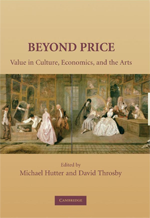
Beyond Price: Value in Culture, Economics, and the Arts; Edited by Michael Hutter and David Throsby; Cambridge University Press, 2007, 324 pages
Repeatedly whipsawed by state budget emergencies, and by swings in the public's perception of what art is and how government ought to support it, state arts agencies are developing innovative ways to refocus their efforts from supporting arts providers through grant-giving to the larger public benefits of their work. Tiny agencies often overlooked among the welter of much larger line items in state budgets, they nonetheless have considerable impact in determining the destinies of arts providers, and the different constituencies they serve.
Introduction
Sue Coliton, Paul G. Allen Family Foundation (moderator); Nancy Fushan, Bush Foundation; Lawrence Thoo, San Jose Office of Cultural Affairs; Ben Cameron, Doris Duke Charitable Foundation (interlocutors).
Cornelia Carey, Craft Emergency Relief Fund (moderator); Carolyn Somers, Joan Mitchell Foundation (interlocutor).
At the 1997-98 New York Grantmakers in the Arts' program meetings, members agreed to focus on one discipline for a more in-depth look. Dance, perhaps the most beleaguered of all disciplines, was selected as the first test.
It was agreed that the goal was to raise the level of understanding of the needs and issues facing New York City's dance community. NYGIA commissioned Mindy Levine, a respected consultant who is well versed in dance and has completed studies for Dance/USA, to prepare a briefing paper: "New York City's Dance Community: Current Status and Needs."