
During the 1960s, a progressive liberation of the spectator from observer to active participant occurred in the visual and performing arts, which were reciprocally informed by participatory forms of social protest and performance: marches, sit-ins, riots, and so on. Dancer and choreographer Anna Halprin (née Ann Schuman, 1920–), with her San Francisco Dancers’ Workshop, was directly involved in these developments, and their experiments soon infiltrated the creative endeavors of her husband, landscape architect Lawrence Halprin (1916–2009).
Search
The GIA Library is an information hub that includes articles, research reports, and other materials covering a wide variety of topics relevant to the arts and arts funding. These resources are made available free to members and non-members of GIA. Users can search by keyword or browse by category for materials to use in research and self-directed learning. Current arts philanthropy news items are available separately in our news feed - News from the Field.
At October’s GIA preconference “Measuring Impact and Translating Value: Support for Individual Artists,” more than six dozen funders convened to share their experiences supporting individual artists and to ponder how to gauge and communicate the results. The Jerome Foundation’s Eleanor Savage and Tucson Pima Arts Council’s Roberto Bedoya shepherded an agenda that included five artists speaking about their work and careers.
Art is not magic; most artists are not all that different from other people. However, many of them developed a skill or asset that most of us haven’t: a fascination for the undercurrent in our society, in our social encounters, in our practices, in our organizations.
Jaap Warmenhoven, Stanford Social Innovation Review
The time has come for the arts to pay overdue attention to teaching artistry.
Despite New York City’s status as the dance capital of the United States, rising real estate prices are challenging the city’s ability to serve as a creative incubator, with space — an essential resource for making dance — in waning supply. Choreographers and dancers need to work in a large open area with a sprung floor, but as real estate values climb, long-standing dance studios are being bought by developers and converted into residential or commercial spaces.
These are the sooty days and nights of fire, ashes and displacement. The aftermath of loss is reassessment and ultimately, response. We artists — poets, musicians, painters, photographers, craftspeople, writers, graphic designers, actors, sculptors, singers — possess the skills that can unpack the events and emotions brought forward by the devastating inferno of 2007. Our skills will also help us imagine a new San Diego. Our creative response to this tragedy serves neighbors, but our colleagues, students, and ourselves as well. We have not suffered more than others. Instead we suffer in league with our fellow San Diegans. We must help them cope, recover and flourish anew.
The opportunities to connect communities through culture and to use that cultural engagement to educate one another are simultaneously compelling and challenging to cultural foundations and philanthropists. Recent reports and research provide strong arguments and preliminary insights into ways that culture can advance engagement across boundaries, both geographic and societal. But the most challenging efforts may be those intended to connect the United States to Muslim populations abroad.
The struggle to ensure that art work is recognized as real work and compensated accordingly is an essential one, and it continues through the efforts of art collectives and organizations, the actions of artists, and countless individual decisions to accept or reject engrossing but unpaid jobs.
— Elyse Mallouk, “On Laboring for Love”
— Elyse Mallouk, “On Laboring for Love”
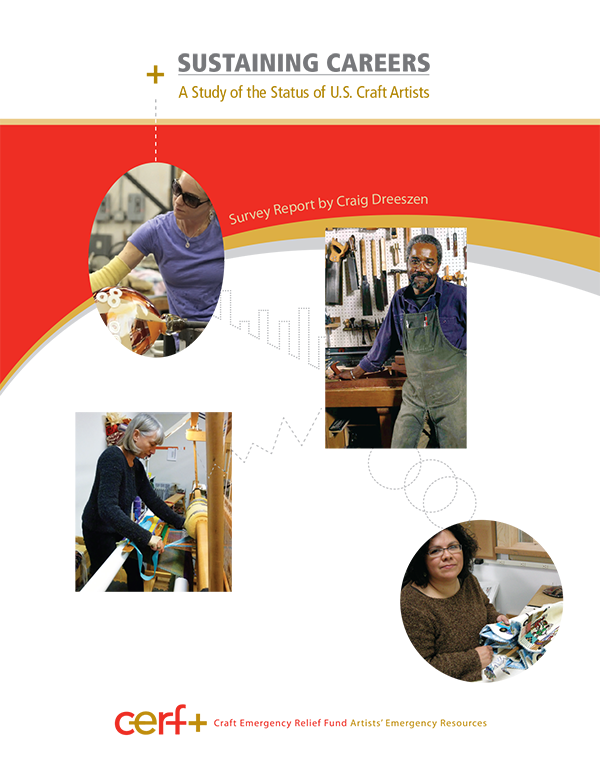
A national research study commissioned by CERF+ (Craft Emergency Relief Fund + Artists’ Emergency Resources), and conducted by Dreezen and Associates with grant support from the Windgate Charitable Foundation, is now available. Sustaining Careers: A National Study of the Status of U.S.
One of the most interesting aspects of GIA’s Research Initiative on Support for Individual Artists has been the opportunity to delve deeply into funders’ programs and practices. By its very nature, data collection requires creating categories and standard definitions, and then using this vocabulary to quantify what funders are actually doing.