
Understanding and embracing transformational change are ubiquitous in cultural policy circles. Research on dramatic demographic shifts, seismic alterations in technology and audience consumption, and postrecession political realities compel arts leaders to master not only their genre but the sticky notion of change itself. Grantmakers in the Arts' own equity work, EmcArts Community Innovation Labs, and ArtPlace’s placemaking practices are all attempts to recalibrate the arts funding ecosystem to respond and adapt to change.
Search
The GIA Library is an information hub that includes articles, research reports, and other materials covering a wide variety of topics relevant to the arts and arts funding. These resources are made available free to members and non-members of GIA. Users can search by keyword or browse by category for materials to use in research and self-directed learning. Current arts philanthropy news items are available separately in our news feed - News from the Field.
On June 2, 2015, Alternate ROOTS Executive Director, Carlton Turner, presented the following as a keynote address at the Grantmakers in the Arts Racial Equity Forum in Atlanta, Georgia.
Introduction: Georgia Men
“Black people did not come back from Georgia.”
“A man or woman that had learned that they might be taken south might do anything.”
“A man who had to see his son stand naked before buyers might do anything.”
Art is not magic; most artists are not all that different from other people. However, many of them developed a skill or asset that most of us haven’t: a fascination for the undercurrent in our society, in our social encounters, in our practices, in our organizations.
Jaap Warmenhoven, Stanford Social Innovation Review
September 2015, 58 pages. DeVos Institute of Arts Management, 1300 Pennsylvania Ave NW, Suite 410, Washington, D.C. 20004. (301) 314-0963. www.devosinstitute.net.
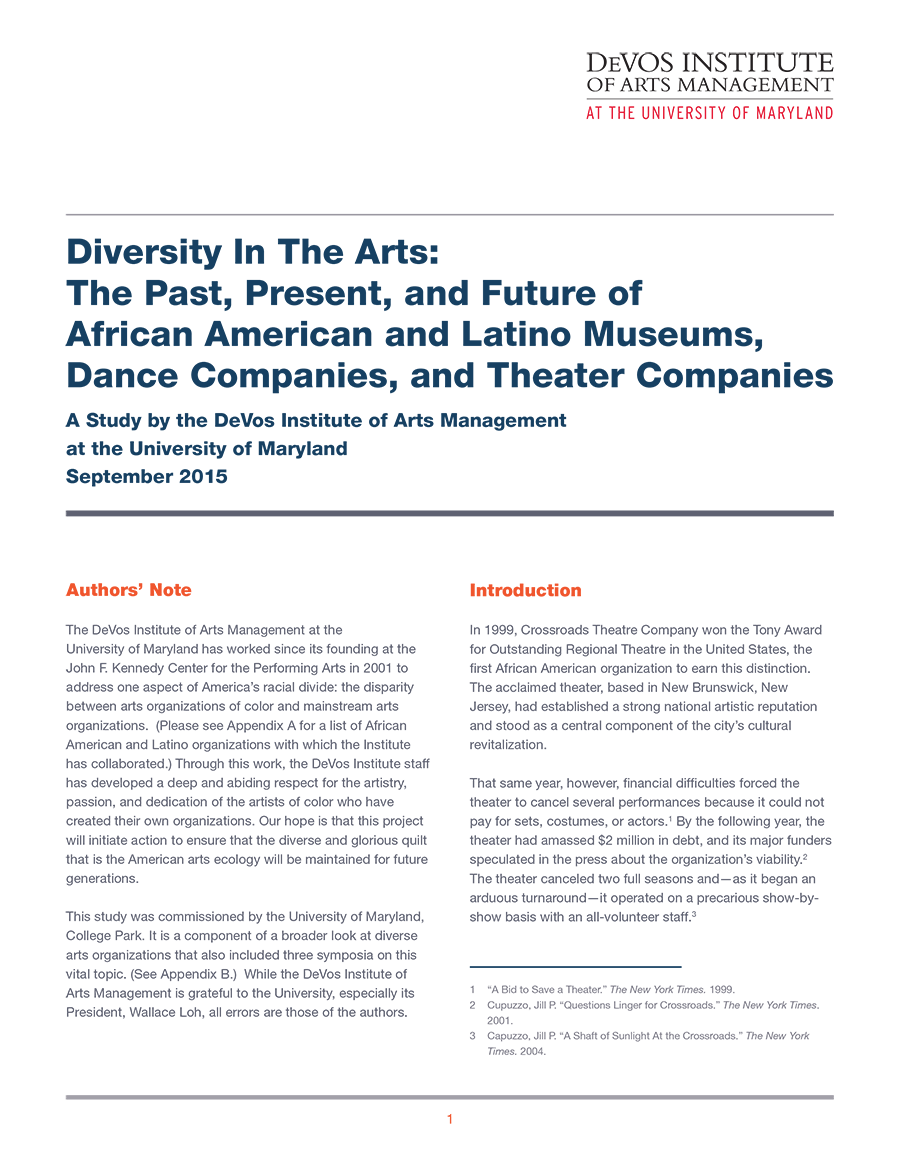
Download:
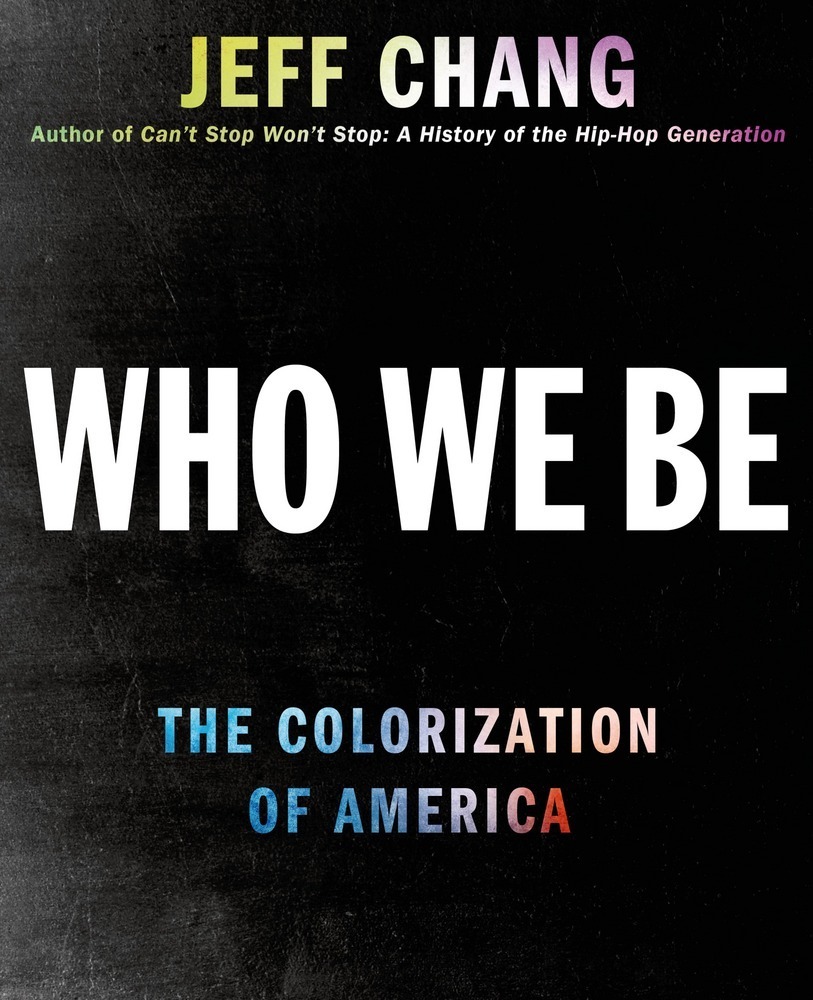
Jeff Chang. 2014, 403 pages, St. Martin’s Press, New York, NY
The opportunities to connect communities through culture and to use that cultural engagement to educate one another are simultaneously compelling and challenging to cultural foundations and philanthropists. Recent reports and research provide strong arguments and preliminary insights into ways that culture can advance engagement across boundaries, both geographic and societal. But the most challenging efforts may be those intended to connect the United States to Muslim populations abroad.
In January I had the privilege to attend the Future Aesthetics 2.0 retreat, co-organized by Marc Bamuthi Joseph, director of Performing Arts of the Yerba Buena Center for the Arts, and James Kass, executive director of Youth Speaks. Participating were twenty-three performance-based artists, Helicon Collaborative partners Holly Sidford and Alexis Frasz, and Cheryl Ikemiya from the Doris Duke Charitable Foundation, which funded the project through its Fund for National Projects.
While I was volunteering at the Park Slope Armory evacuation shelter I asked for advice from a member of the clergy when I encountered a problem I couldn’t solve. He told me to follow my instinct. I said I didn’t trust my instinct; the situation was far beyond my experience. He responded, “This is your opportunity to stretch yourself.” A lot of stretching has been going on in the aftermath of Hurricane Sandy. People, organizations, and communities have been coming together to meet a challenge and stretch in ways we had no idea were pos-sible.