
Adults age sixty-five and above are currently the fastest-growing segment of the US population. In 2016, there were 47.8 million individuals age sixty-five and over in the United States (US Census Bureau 2017), and this number is expected to more than double by 2060. By 2040, nearly half of older adults are expected to come from diverse racial/ethnic and socioeconomic backgrounds (Vincent and Velkoff 2010; Johnson, Rodriquez-Salazar, et al. 2018). San Francisco’s population of older adults is higher than the national norm.
Search
The GIA Library is an information hub that includes articles, research reports, and other materials covering a wide variety of topics relevant to the arts and arts funding. These resources are made available free to members and non-members of GIA. Users can search by keyword or browse by category for materials to use in research and self-directed learning. Current arts philanthropy news items are available separately in our news feed - News from the Field.
The League of American Orchestras’ upcoming national conference in Detroit falls just days before the fiftieth anniversary of the 1967 Detroit uprising, the largest urban disruption in America since the Civil War. According to Detroit Symphony Orchestra (DSO) president Anne Parsons, the 1967 riot was the context for the orchestra’s fellowship program for African American musicians.
The League of American Orchestras invited Alan Brown to deliver this keynote at our 2014 conference in Seattle. We were delighted that he turned his attention to the lessons learned from organizations that stay creatively healthy, arguably our most essential role.
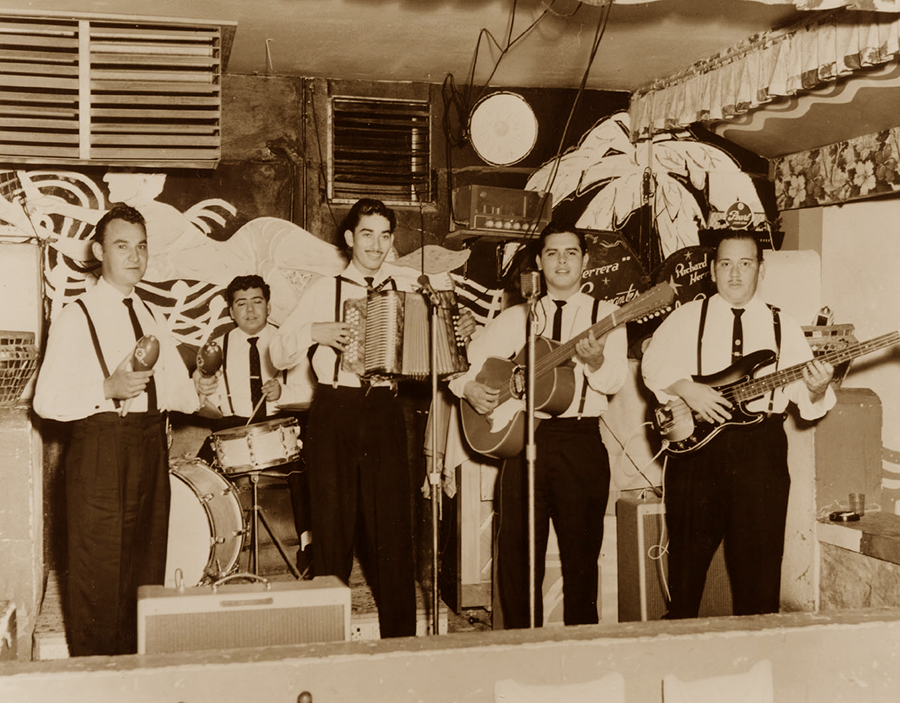
Flaco Jiménez with Los Caminantes (the band he made his first recordings with for Rio Records). San Antonio, mid to late 1950s. Photo courtesy the Arhoolie Foundation, all rights reserved.
As a writer who often ponders music and its many audiences, I spend a lot of time thinking about how some artists thrive, while others don’t, in places far from their first home. As listeners, members of an audience, we hear something that feels real, powerful, to us, and we feel connected to the experience of someone who may seem not much like us. From this experience we have a single urgent response: how can we share this with the world? You’ve got to hear this…
About four years ago I attended an extraordinary meeting in Philadelphia. Susan Nelson, principal of Technical Development Corporation (TDC), was presenting the draft of Getting Beyond Breakeven to the Greater Philadelphia Cultural Alliance and many other stakeholders associated with the work.
This article is a reprinting of a blog originally posted on ArtWorks. See that post at http://www.arts.gov/artworks/?p=11955.
By the time of the Poor People’s March on Washington in 1968, the Chicano community had already established a political bloc that had been called into action to support many local campaigns throughout the Southwest, as well as Robert F. Kennedy’s presidential campaign. From the political rallies, protests, and marches in the late 1960s and throughout the 1970s emerged the powerful political voices of Reies López Tijerina, Rodolfo “Corky” González, Dolores Huerta, and of course César Chavez.
Just like its artistic counterparts, the opera industry last year made cutbacks (in jobs and salaries, for example) and compromises (fewer productions and performances) to continue to thrive. Since the recession began, funding sources have shifted, with federal funding, corporate support, and subscriptions on the decline. Foundation support varies regionally. At the same time, costs have continued to escalate at a rate significantly greater than the Consumer Price Index.
Fearless Journeys: Innovation in Five American Orchestras is the report of a 2009 study, funded by MetLife Foundation, which explored and documented five examples of promising innovative practices in American orchestras. This is the first formal attempt to define and to understand the organizational factors that support innovation in orchestras.